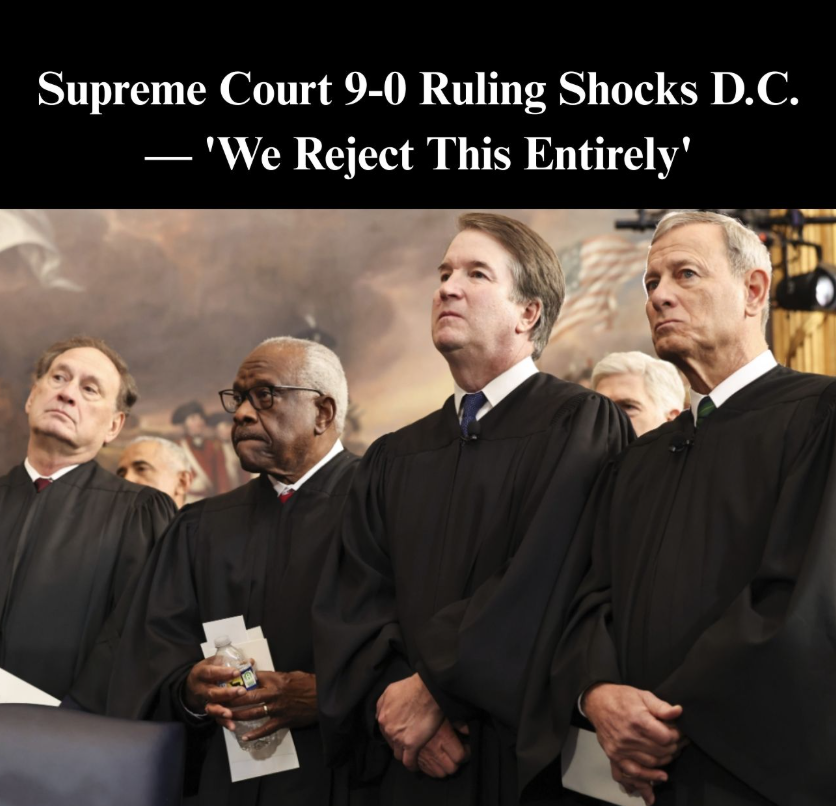
Supreme Court Delivers Key Ruling on Immigration
Supreme Court Visa Revocation Ruling Defines DHS Authority
The Supreme Court visa revocation ruling clarified the limits of judicial review in immigration cases. The court ruled that federal courts lack jurisdiction to review visa revocations involving fraudulent marriages.
The unanimous decision stated that courts may review initial visa denials. However, judges cannot intervene once the Department of Homeland Security rescinds an approved visa.
The ruling highlights the significant authority given to the Department of Homeland Security in immigration matters. Officials said the decision could affect enforcement of immigration laws.
Supreme Court Opinion Explains Visa Revocation Authority
Justice Ketanji Brown Jackson authored the court’s opinion in the case. She described the authority granted to the Department of Homeland Security as a “quintessential grant of discretion.”
The opinion explained that Congress did not set clear limits on the Secretary’s authority. Therefore, the department can decide how and when to revoke approved visas.
The court cited Section 1155 of immigration law in its reasoning. According to the statute, the Secretary may revoke a visa petition “at any time” for sufficient cause.
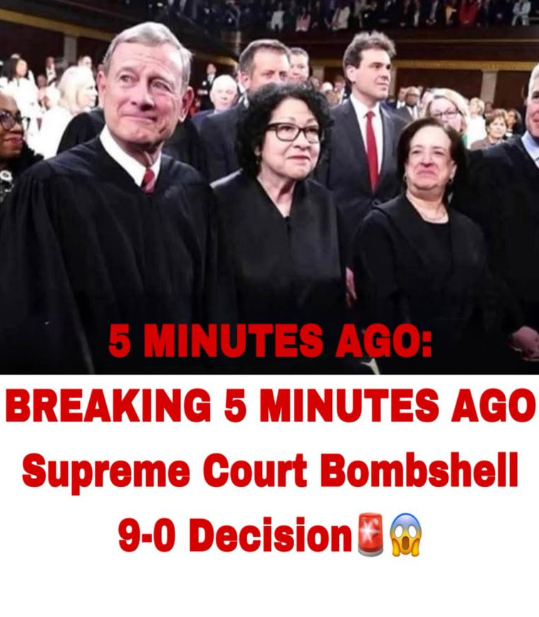
The decision was unanimous, with all nine justices supporting the ruling. Consequently, the Supreme Court visa revocation ruling confirmed the department’s broad discretion.
Case Background: Bouarfa v. Mayorkas
The case involved Amina Bouarfa, a United States citizen. She challenged the government after officials revoked her husband’s visa.
Her husband lost eligibility for residency after authorities discovered a previous fraudulent marriage. The Department of Homeland Security then rescinded his approved visa.
During oral arguments, justices examined the statute allowing judicial review only for visa denials. This suggested Congress intended to support DHS authority to cancel visas.
Chief Justice John Roberts noted that Bouarfa’s husband could reapply for a visa. If denied, he could potentially challenge that decision in court.
Concerns Raised by Immigration Advocates
The petitioner’s attorney, Samir Deger-Sen, said restarting the visa process can cause delays. Families may face long waiting periods and complex procedures.
Immigration advocates argued that limiting judicial oversight could create additional challenges. The U.S. immigration system already faces a backlog exceeding three million cases.
The American Civil Liberties Union and other critics expressed concern about reduced court supervision. They argued constitutional violations could go unchecked.
However, the court found no evidence of racial bias in the Bouarfa case. Therefore, the ruling focused strictly on statutory interpretation.
Related Immigration Ruling in Washington State
Earlier this month, the U.S. Court of Appeals for the Ninth Circuit issued a separate immigration decision. The court allowed deportation flights to continue from a Seattle-area airport.
The appeals court overturned a 2019 local executive order in King County, Washington. That order had attempted to block deportation flights from King County International Airport.
The airport is also known as King County International Airport or Boeing Field. The court ruled the county violated its contract by blocking deportations.
The decision was viewed as favorable for the incoming administration of Donald Trump. Trump has pledged to expand deportation enforcement.
Trump’s appointed border policy adviser, Tom Homan, has supported the plan. He previously served as acting director of U.S. Immigration and Customs Enforcement.