HERE WE GO: Iran just responded back…𝗦𝗲𝗲 𝗺𝗼𝗿𝗲
Strait of Hormuz Crisis Begins After Coordinated Airstrikes
The Strait of Hormuz crisis began escalating after coordinated strikes across multiple Iranian cities. Officials said the attacks targeted nuclear-related facilities and key regime infrastructure.
Locations included Tehran, Isfahan, Qom, Kermanshah, and Karaj. The strikes focused on Islamic Revolutionary Guard Corps command centers and missile sites.
U.S. President Donald Trump described the operation as necessary to eliminate “imminent threats.” However, Israeli Prime Minister Benjamin Netanyahu framed the strikes as preemptive defense.
Israeli reports suggested the attack may have killed Ali Khamenei. Meanwhile, Iranian state media said he was “safe and sound.”
Strait of Hormuz Crisis Deepens After Iran Retaliation
Iran responded quickly with ballistic missiles and drones. The attacks targeted Israel and U.S. military bases across the region.
Targets included installations in Qatar, United Arab Emirates, Bahrain, Kuwait, Jordan, Iraq, and Saudi Arabia.
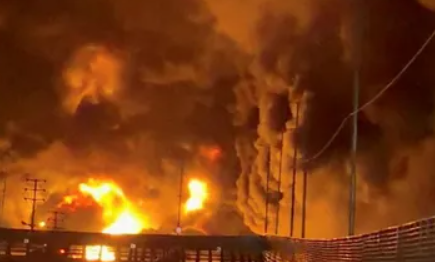
Explosions were reported in several Gulf capitals. Therefore, fears of a wider regional conflict increased rapidly.
The Strait of Hormuz crisis intensified when Iran’s IRGC Navy issued warnings to commercial ships. Broadcasts declared that passage through the strait was “not allowed.”
Shipping Disruptions Worsen the Strait of Hormuz Crisis
Multiple vessels reported receiving warnings through maritime emergency channels. Meanwhile, European and British maritime missions confirmed the broadcasts.
Several commercial ships began altering routes after the warnings. Some tankers slowed, stopped, or reversed course near the strait.
Shipping companies and oil traders responded cautiously. Additionally, some firms instructed fleets to avoid the area completely.
The U.S. Navy warned it could not guarantee safety for commercial vessels. Therefore, many global shipping companies increased caution.
Global Energy Markets React to the Strait of Hormuz Crisis
The Strait of Hormuz crisis quickly disrupted one of the world’s most critical energy routes. The narrow waterway connects the Persian Gulf to the Gulf of Oman.
The strait handles roughly 20–21 million barrels of oil daily. This amount represents about one-fifth of global oil consumption.
Large volumes of liquefied natural gas from Qatar also pass through the corridor. Major exporters include Saudi Arabia, Iraq, United Arab Emirates, Kuwait, and Qatar.
Analysts warned that prolonged disruption could drive major energy price increases. Some estimates say oil could test $100 per barrel.
Economic Risks From the Strait of Hormuz Crisis
Other projections suggest prices could reach $120 or even $150 during severe disruption. Meanwhile, tanker insurance rates have already risen sharply.
Energy price spikes could spread across global markets. Higher costs would affect transportation, manufacturing, and heating.
Economists also warned of broader economic consequences. Sustained disruption could create recession pressure in several countries.
Asian importers remain especially vulnerable during the Strait of Hormuz crisis. Countries such as China, India, Japan, and South Korea rely heavily on Gulf energy.