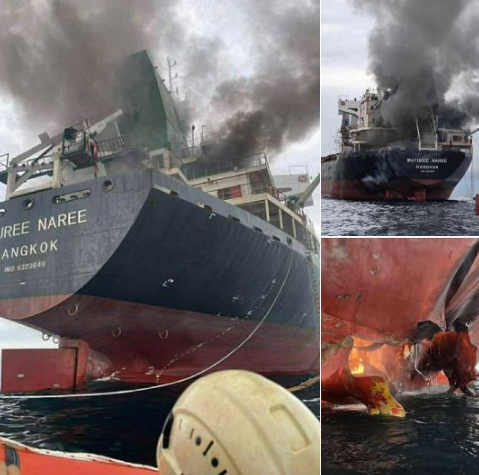
Commercial Ship Attacked in Strait of Hormuz Amid Rising Tensions
Strait of Hormuz Ship Attack Raises Regional Tensions
The Strait of Hormuz ship attack has heightened tensions across the Middle East. A commercial vessel attempting to pass through the waterway reportedly came under attack.
The incident alarmed governments and shipping companies worldwide. The narrow passage remains a critical route for global trade.
Background to the Strait of Hormuz Ship Attack
Earlier warnings from Islamic Revolutionary Guard Corps increased concern in the region. Iranian officials said vessels linked to the United States or its allies could become targets.
Some ships reportedly ignored these warnings while entering the strait. Consequently, tensions increased before the Strait of Hormuz ship attack occurred.
Details of the Strait of Hormuz Ship Attack
Maritime monitoring sources reported that several commercial ships were struck by projectiles. One Thai-flagged bulk carrier caught fire in its engine room.
Crew members evacuated part of the vessel after the fire began. Meanwhile, ships registered in Japan and the Marshall Islands also suffered damage.
Immediate Response After the Strait of Hormuz Ship Attack
Authorities have not reported large-scale casualties so far. However, investigations continue as officials gather more details.
Shipping organizations warned vessels to move carefully through the area. Additionally, they advised crews to report suspicious activity immediately.
Importance of the Strait of Hormuz
The Strait of Hormuz ship attack highlights the strategic importance of this maritime corridor. The strait connects the Persian Gulf to the Gulf of Oman.
About one-fifth of global oil shipments pass through the waterway. Therefore, disruptions can affect international energy markets.
Energy Producers Rely on the Strait
Major producers depend heavily on this route to ship oil and gas. These include Saudi Arabia, the United Arab Emirates, Kuwait, and Iraq.
Even small disruptions can create global market uncertainty. Shipping delays often increase insurance costs and fuel prices.
Impact on Shipping Operations
After the Strait of Hormuz ship attack, several vessels slowed or changed course. Some ships anchored nearby while waiting for further guidance.
Insurance companies now classify the area as high risk. Consequently, shipping premiums for vessels entering the Gulf have increased.
Military Tensions Around the Strait
The Strait of Hormuz ship attack occurred amid broader regional military activity. U.S. and allied forces recently conducted strikes on Iranian military assets.
In response, Iran launched missiles and drones toward military targets. Analysts warn these developments could increase regional instability.
Economic Concerns Following the Attack
Global markets reacted cautiously to the Strait of Hormuz ship attack. Any prolonged disruption could reduce oil shipments worldwide.
Countries in Asia and Europe rely heavily on Gulf energy supplies. Therefore, governments are reviewing contingency energy plans.
Calls for De-Escalation
International leaders have urged all parties to protect civilian shipping. They stress the importance of maintaining freedom of navigation.
However, the situation around the Strait of Hormuz ship attack remains uncertain. Global markets and governments continue to monitor developments closely.