Trump third term speculation discussion

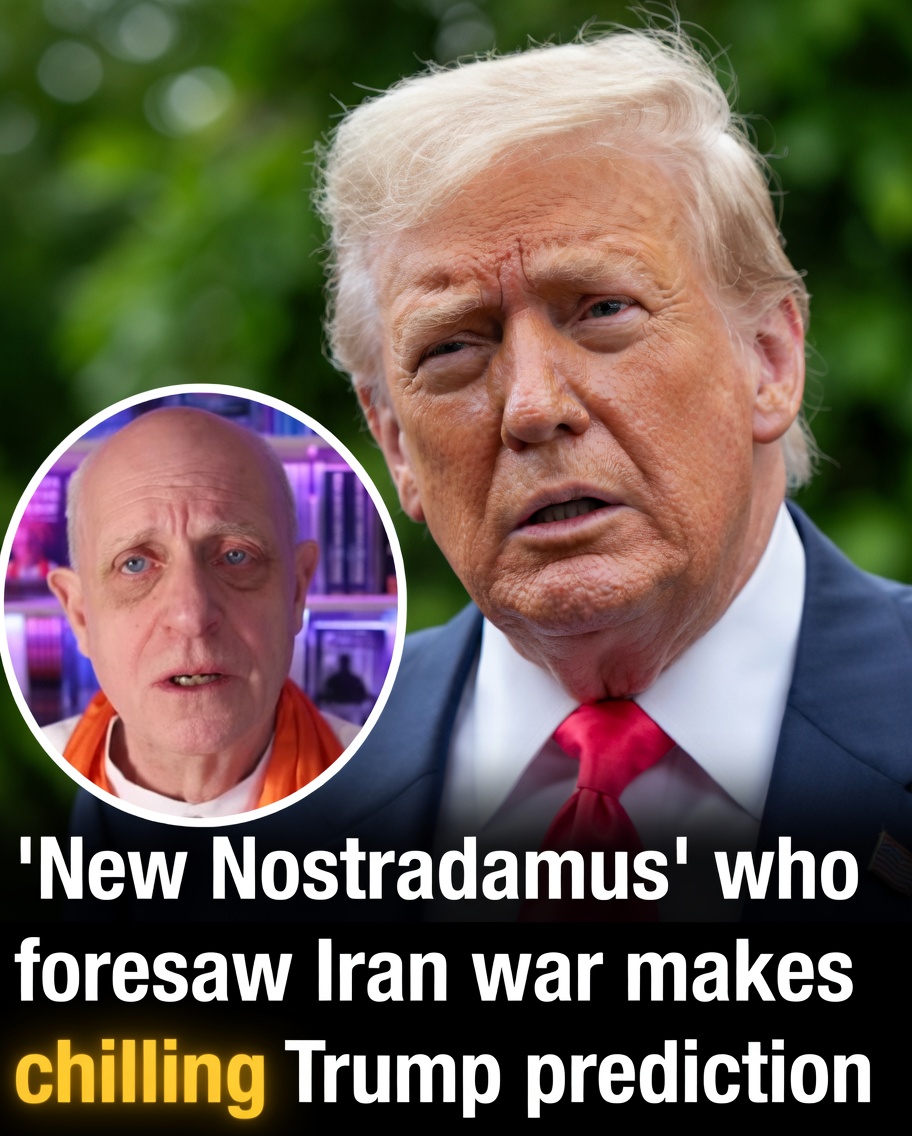
‘New Nostradamus’ who foresaw Iran war makes chilling prediction about Trump

Craig Hamilton-Parker has drawn attention with a prediction that challenges long-standing political norms. He suggests that in times of global instability, even firm legal limits—such as those preventing a third presidential term—could come under pressure. His perspective centers less on law itself and more on how people respond during periods of crisis.

In his view, a potential third term for Donald Trump would not arise in a stable environment. Instead, it would emerge during a time marked by fear, conflict, and uncertainty. He points to rising geopolitical tensions, including concerns surrounding Taiwan and instability in the Middle East, as signs of a shifting global landscape.

Hamilton-Parker frames these developments as evidence that traditional systems may already be under strain. According to his interpretation, increasing pressure from international events could gradually weaken confidence in established rules, creating conditions where once-unthinkable ideas gain traction.

Regardless of whether one believes in psychic predictions, the idea resonates with broader concerns. History has shown that moments of crisis can lead societies to reconsider principles they once viewed as fixed. Under stress, public opinion can shift in ways that seem unlikely during calmer periods.

The reference to the Twenty-second Amendment to the United States Constitution highlights this tension. While it is a firmly established legal boundary, the discussion reflects how fear and uncertainty can influence how people view even the most stable institutions.

Ultimately, the warning is less about predicting a specific outcome and more about human behavior. It raises questions about resilience, decision-making, and how societies respond under pressure, suggesting that the greatest variable in times of crisis may not be the law itself, but how people choose to interpret it.

Similar Posts

  • 20 Minutes ago in Arizona, Savannah Guthrie was confirmed as…

    Just 20 minutes ago in Arizona, Savannah Guthrie was confirmed as the focus of a rapidly developing update that has already begun to ripple across newsrooms and social media. While early headlines sparked confusion and speculation, sources close to the situation emphasized that the confirmation centers on a professional development rather than the alarming rumors…

  • A few hours ago a big fire broke out in M… See more

    Breaking news: A few hours ago, a massive fire erupted in the city of [City Name], causing widespread concern among residents. Firefighters rushed to the scene as thick smoke filled the sky, and emergency services worked tirelessly to contain the blaze. Eyewitnesses described scenes of chaos, with people evacuating nearby buildings and streets being closed…

  • Suspect Arrested in Attack on Trump Ally’s Office

    A suspect accused of attacking the office of U.S. Attorney Alina Habba in Newark, New Jersey, was taken into custody Saturday, Attorney General Pam Bondi announced. The FBI identified the suspect as Keith Michael Lisa, 51, a California native with ties to New York City and Mahwah, New Jersey. Federal agents said Lisa was arrested…

  • Pritzker, Democrats Vow To Prosecute Trump Officials After 2028 Elections

    Illinois Governor JB Pritzker, who is considered a potential presidential candidate for 2028, recently announced his plans to pursue politically motivated prosecutions against Trump officials—a strategy he has dubbed “Project 2029.” In an interview with the New York Times, Pritzker characterized this initiative as a “forward-looking framework” for Democrats seeking to regain national power following…

  • “Thirty Quiet Minutes in Washington: A Moment of Reflection for Donald Trump”

    The stillness that settled over Washington, D.C., that morning felt unusual—not dramatic, but unfamiliar. The nation’s capital is normally defined by motion: motorcades gliding through traffic, reporters calling out questions, and the steady choreography of political life. Yet for a brief period, the pace seemed to slow. In that quiet moment stood Donald Trump, facing what many observers would later describe as a quietly consequential point in time. There were no rallies or roaring crowds, no carefully staged speeches delivered to eager supporters. Instead, there was restraint. Those who watched closely noticed a subtle change in his presence. It was not collapse or defeat, but a visible weight that softened the certainty often associated with him. The familiar projection of unwavering confidence seemed tempered by a stillness that suggested reflection. It was the kind of moment that does not loudly announce itself, yet lingers precisely because of what remains unsaid. For years, Trump’s public image has been defined by momentum—confidence projected outward and authority reinforced through repetition. That persona endured controversy, legal pressure, electoral loss, and relentless scrutiny. Yet here, removed from the noise that usually surrounded him, the contrast was striking. This was not the Trump of campaign stages or executive announcements. It was a former president standing in the aftermath of power, aware that history had shifted from anticipation to evaluation. Observers were careful not to overinterpret the scene. The moment did not display weakness. Instead, it hinted at acknowledgment—an understanding that decisions once framed as bold or disruptive had moved fully into the historical record. The future, which often serves as a political shield, had narrowed into the present. Questions of accountability—legal, political, and historical—were no longer distant possibilities but ongoing realities. What unfolded during those thirty minutes was less a political performance than a human pause. Stripped of slogans and spectacle, Trump appeared less like a symbol and more like an individual confronting the narrowing space between legacy and judgment. Leadership, after all, does not end when office is vacated. Its effects continue to echo through institutions, public debate, and the collective memory of a nation.  As the day progressed and Washington returned to its familiar rhythm, the moment passed quietly. Yet for those paying attention, it felt like a threshold—one where power had receded and reflection had begun.

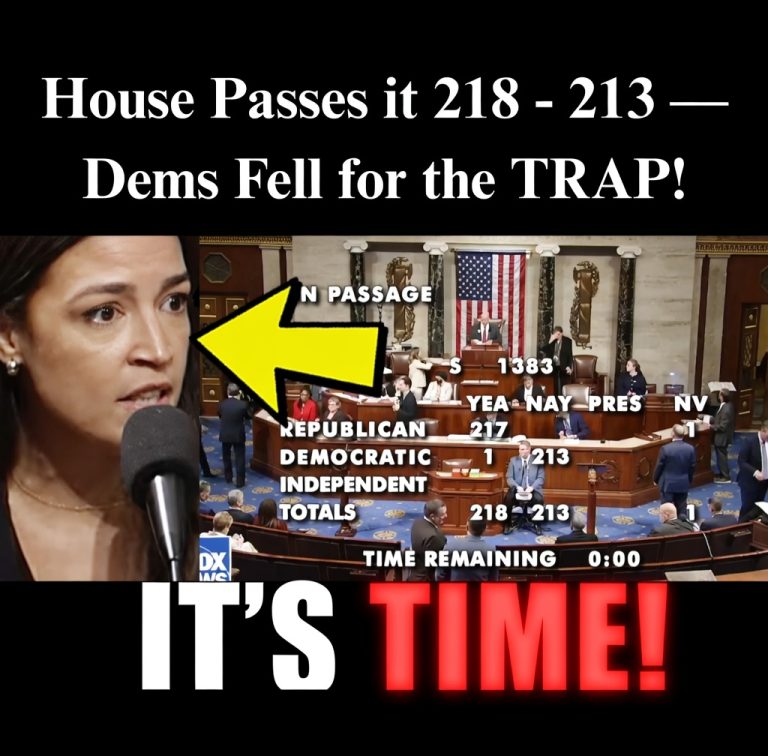
  • House Passes Bill To Ease Permits For Building Out AI Infrastructure

    The House of Representatives passed a bill last week that would make it easier to get federal permits to build infrastructure for AI projects. The bill, known as the SPEED Act, garners support from major tech companies such as OpenAI, Micron, and Microsoft. The bill passed the House by a vote of 218 – 213,…

Leave a Reply

Your email address will not be published. Required fields are marked *