
The U.S. House of Representatives has voted 213 to 184 to pass legislation aimed at speeding up federal permitting for interstate natural gas pipelines. The bill would designate the Federal Energy Regulatory Commission as the lead agency for pipeline permitting reviews.
Under the legislation, FERC would be allowed to consider water quality assessments as part of its environmental review, rather than waiting for separate Clean Water Act certifications from states.
Supporters say state-level certifications have often delayed pipeline approvals for years. The bill is titled the Improving Interagency Coordination for Pipeline Reviews Act. It is one of several measures in Congress aimed at accelerating federal permitting processes.
Another bill, the Promoting Efficient Review for Modern Infrastructure Today Act, also passed the House with bipartisan support. Lawmakers have made broad permitting reform a priority as they seek to expand energy infrastructure to meet rising electricity demand.
That demand has grown in part due to the rapid expansion of data centers across the country. Supporters of the legislation also argue that faster permitting could help reduce household energy costs, particularly by enabling quicker construction of energy projects that can increase supply and competition in the market.
The agency has approved most natural gas pipeline proposals that have come before it recently.
Energy Secretary Chris Wright said Friday that gasoline prices could begin falling within weeks despite a sharp spike tied to the escalating conflict with Iran. Wright said the disruption to global oil markets is likely temporary.
“Look, Iran’s been an escalator of energy prices [for] 47 years, the whole history of their regime,” Wright said in an interview, Newsmax reported. “We got a little bit of an interruption right now to finally put an end to their ability to wreak havoc, to kill Americans, and to terrorize their neighbors.”
Advertisement
His remarks came as oil traders and drivers reacted to rising crude and gasoline prices following joint U.S.-Israeli military operations against Iran.
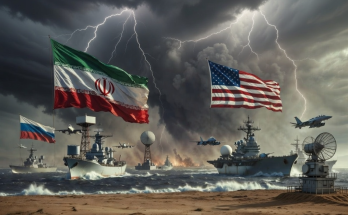
Iran has also taken steps to disrupt shipping through the Strait of Hormuz. The waterway is one of the most critical oil choke points in the world. The strait connects the Persian Gulf to the Gulf of Oman and normally carries about 20 percent of global petroleum liquids consumption. Any threat to shipping through the passage can quickly impact global energy markets.
AAA reported that the national average price of a gallon of regular gasoline reached $3.32 on Friday. That price was up from $2.98 just one week earlier.
Patrick De Haan, head of petroleum analysis at GasBuddy, warned that prolonged disruption could worsen the situation. “That means millions of barrels of oil that would normally flow to global markets simply aren’t reaching buyers,” De Haan said.
“Every additional day [of] the disruption continues compounds the problem. Even if the Strait reopened immediately, the market would still face the challenge of catching up on days’ worth of missing shipments — an increasingly difficult task as the backlog grows,” he added.
Analysts have warned that any extended closure or severe restriction in the waterway could push oil prices significantly higher. Such a move could increase inflation risks and place pressure on the White House.
Gasoline prices had remained below levels seen throughout much of 2024 and early 2025 before the recent spike.
President Donald Trump said Thursday that he is not concerned about the potential for a long-term surge in gas prices. “I don’t have any concern about it,” Trump told Reuters.
“They’ll drop very rapidly when this is over, and if they rise, they rise, but this is far more important than having gasoline prices go up a little bit,” Trump said.
The administration has argued that the ongoing military and naval actions will help stabilize global oil markets.
Wright said he believes prices could begin easing within weeks rather than months. For consumers, the direction of fuel prices will likely depend on developments in the Middle East. Shipping lanes, refinery operations, and oil exports could drive the price outlook day by day, particularly as geopolitical tensions and agreements, such as those involving Iran’s nuclear program, influence market stability and supply levels.