House Unanimously Passes Bill To Prioritize Veteran Survivors

The U.S. House of Representatives came together in a rare show of unity this week and unanimously passed a measure to resurrect an office that advocates for the survivors of U.S. military veterans.

By a vote of 424-0, the House passed H.R. 1228, known as the “Prioritizing Veterans’ Survivors Act,” a strong bipartisan measure to restore the Office of Survivors Assistance (OSA) to its original role under the Secretary of Veterans Affairs.

The measure ensures that the office once more serves as the principal adviser on policies that affect military families and the survivors of loved ones lost in military service. The passage of the bill reverses a 2021 action that sidelined advocacy for veterans’ survivors, according to reports.

The bill, sponsored by Rep. Juan Ciscomani (R-Ariz.), amends Title 38, United States Code, “to clarify the organization of the Office of Survivors Assistance of the Department of Veterans Affairs,” according to GovTrack. The measure now heads to the Senate for consideration.

VA Secretary Doug Collins, a former GOP lawmaker from Georgia, recently said that he was supportive of Elon Musk and his Department of Government Efficiency efforts to streamline his department as well as the rest of the government.

“I’m going to make decisions best for my employees and best for the veterans. They’re giving us good advice, looking with fresh eyes,” Collins told NewsNation. “We need to make sure we’re doing the best we can for those veterans out there.”

Also, in a recent video, Collins addressed “rumors” about reports that there would be stiff cuts to VA benefits and veterans’ care under Trump.

“We’re putting Veterans number one back at the VA,” he said, noting that while change can cause some friction and uncertainty, caring for vets was still the primary mission.

Among the claims he disputed was that VA health care would deteriorate. Collins categorically rejected this assertion, stating that the department has fortified its health care and benefits by preserving 300,000 mission-critical positions to guarantee uninterrupted services. He also countered another rumor suggesting that Veterans’ benefits were being cut.

“They’re not,” he said, explaining that VA had redirected nearly $98 million toward Veterans’ care and services rather than reducing them.

Collins, a colonel and a chaplain in the Air Force Reserve, addressed the rumor that VA was laying off Veterans Crisis Line responders.

“We did not lay off any Veteran Crisis Line responders,” he noted, while assuring that those answering crisis calls remain in place to support veterans in need.

Collins then encouraged Veterans to obtain information directly from the VA rather than depending on the misinformation that circulates in political discussions.

“When you want the truth, come to me, not the Whopper line up on Capitol Hill,” he said, referring to politically motivated but untrue claims about cuts to VA services under the current commander-in-chief.

Collins did, however, send  “an email sent to employees Friday evening that the agency was extending an offer of deferred resignation or retirement prior to a reduction in the workforce that will take place later in the fiscal year,” Stars and Stripes reported.

“Employees approved for the program will receive full pay and benefits through Sept. 30, the end of the fiscal year, Collins said,” the outlet added.

Earlier this month, the GOP-controlled House passed a measure that would require the federal government to deport any illegal immigrant who assaults a police officer over the objections of a majority of Democrats.

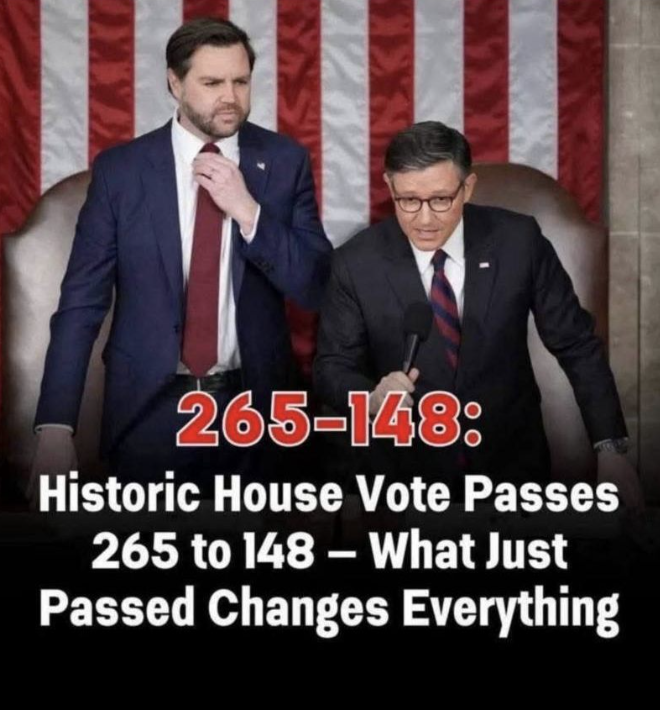
The legislation passed with a vote of 265 to 148, with 54 Democrats siding with the GOP. The Detain and Deport Illegal Aliens Who Assault Cops Act is the name of the legislation, which Rep. Jeff Van Drew, R-N.J., is leading.

“There is no reason that an illegal alien who attacks our law enforcement should remain in our country; that shows zero respect for our rule of law or our institutions, and they will not be positive contributors to society,” Van Drew said.

The bill mandates that federal authorities hold illegal immigrants in custody until deportation. It also establishes a new category of migrant inadmissibility, specifically targeting illegal immigrants accused of assaulting police, according to Van Drew.
Similar Posts

  • Comey To Appear In Court After Being Indicted For Lying to Congress

    Former FBI Director James Comey is scheduled to be arraigned in a Virginia federal court on Wednesday morning, several weeks after being indicted by a federal grand jury on charges of obstruction of justice and making a false statement. Reports said Comey pleaded not guilty during his appearance Wednesday morning. The case stems from allegations…

  • Trump Admin Asks SCOTUS to Allow Deportation of 350,000 Haitians

    The U.S. Department of Justice asked the Supreme Court of the United States on Wednesday to allow the administration to move forward with ending temporary deportation protections for more than 350,000 Haitian immigrants. The request for emergency relief is the latest development in legal disputes stemming from the U.S. Department of Homeland Security’s efforts to…

  • Iranian State TV Announces Death Of Khamenei’s Wife After US Israeli Airstrike

    Iranian state television presenters announced the death of Mansoureh Khojasteh Bagherzadeh, the 79-year-old wife of Supreme Leader Ayatollah Ali Khamenei, after she succumbed to injuries sustained in the same US-Israeli airstrike that killed her husband at his compound in Tehran. She died two days after Khamenei was killed, The Wall Street Journal reported. State television declared that…

  • Kamala Harris Lashes Out At Trump Over Iran Attack

    The Kamala Harris Trump Iran strikes dispute began after Harris criticized President Donald Trump on social media. She warned the United States could be drawn into a broader conflict. Harris said the American people do not want a war with Iran. Additionally, she argued U.S. troops were being placed in danger. Kamala Harris Trump Iran…

  • “Thirty Quiet Minutes in Washington: A Moment of Reflection for Donald Trump”

    The stillness that settled over Washington, D.C., that morning felt unusual—not dramatic, but unfamiliar. The nation’s capital is normally defined by motion: motorcades gliding through traffic, reporters calling out questions, and the steady choreography of political life. Yet for a brief period, the pace seemed to slow. In that quiet moment stood Donald Trump, facing what many observers would later describe as a quietly consequential point in time. There were no rallies or roaring crowds, no carefully staged speeches delivered to eager supporters. Instead, there was restraint. Those who watched closely noticed a subtle change in his presence. It was not collapse or defeat, but a visible weight that softened the certainty often associated with him. The familiar projection of unwavering confidence seemed tempered by a stillness that suggested reflection. It was the kind of moment that does not loudly announce itself, yet lingers precisely because of what remains unsaid. For years, Trump’s public image has been defined by momentum—confidence projected outward and authority reinforced through repetition. That persona endured controversy, legal pressure, electoral loss, and relentless scrutiny. Yet here, removed from the noise that usually surrounded him, the contrast was striking. This was not the Trump of campaign stages or executive announcements. It was a former president standing in the aftermath of power, aware that history had shifted from anticipation to evaluation. Observers were careful not to overinterpret the scene. The moment did not display weakness. Instead, it hinted at acknowledgment—an understanding that decisions once framed as bold or disruptive had moved fully into the historical record. The future, which often serves as a political shield, had narrowed into the present. Questions of accountability—legal, political, and historical—were no longer distant possibilities but ongoing realities. What unfolded during those thirty minutes was less a political performance than a human pause. Stripped of slogans and spectacle, Trump appeared less like a symbol and more like an individual confronting the narrowing space between legacy and judgment. Leadership, after all, does not end when office is vacated. Its effects continue to echo through institutions, public debate, and the collective memory of a nation.  As the day progressed and Washington returned to its familiar rhythm, the moment passed quietly. Yet for those paying attention, it felt like a threshold—one where power had receded and reflection had begun.

  • Supreme Court Could Still Tilt Midterms Toward Republicans

    The U.S. Supreme Court made headlines last week when it ruled to keep New York’s current congressional map in place, temporarily blocking a lower court ruling that had found the map violated the Constitution by diluting the voting power of Black and Latino residents. The unsigned emergency order did not include a vote count or written reasoning,…

Leave a Reply

Your email address will not be published. Required fields are marked *