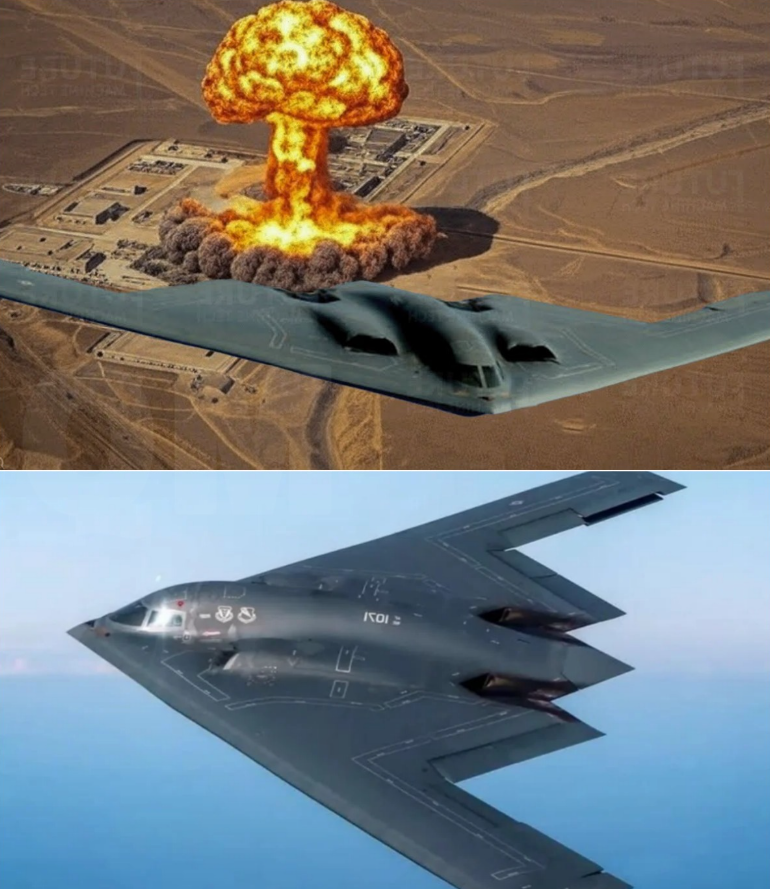
The Northrop Grumman B-2 Spirit (also known as the Stealth Bomber) is indeed one of the most advanced and intimidating aircraft in modern military aviation. Your description captures its essence well—it’s a pinnacle of U.S. technological achievement in stealth, long-range strike, and strategic deterrence. Here’s a refined, up-to-date overview based on official and reliable sources (as of March 2026), confirming and expanding on the key points you raised.
Historical Background
Development began in the late 1970s under the Advanced Technology Bomber program during the Cold War, driven by the need for a platform to penetrate dense Soviet air defenses undetected. Northrop (now Northrop Grumman) won the contract with the flying wing concept. The prototype first flew on July 17, 1989, and the aircraft entered service with the U.S. Air Force in 1997. It has since flown in operations like Kosovo (1999), Afghanistan (2001), Iraq (2003), Libya (2011), and more recently, high-profile strikes in the Middle East.
In the ongoing Operation Epic Fury (the U.S.-Israeli campaign against Iran starting February 28, 2026), B-2 Spirits played a starring role. They conducted precision strikes on hardened underground ballistic missile facilities, nuclear infrastructure (e.g., sites like Natanz), and other deep targets using penetrating bombs like the GBU-31 (2,000-pound class). Reports highlight multi-hour missions where B-2s operated uncontested, dropping massive payloads on missile complexes and leadership-related sites—demonstrating why adversaries fear it: Iran’s air defenses (S-300, Bavar-373) struggle to detect or engage it effectively.
Design and Stealth Technology
The B-2’s flying wing design—no traditional fuselage, tail, or vertical surfaces—minimizes radar reflections by eliminating edges and corners that scatter radar waves. Combined with radar-absorbent materials (RAM) coatings that absorb/deflect radar energy, it achieves an extremely low radar cross-section (RCS), often likened to a “small bird” or even smaller on enemy scopes. It also reduces infrared, acoustic, visual, and electromagnetic signatures. This allows all-altitude penetration of sophisticated defenses.
Key specs:
- Wingspan: 172 feet (52.4 m)
- Length: 69 feet (21 m)
- Height: 17 feet (5.1 m)
- Crew: 2 (pilot and mission commander)
- Engines: 4 × General Electric F118-GE-100 turbofans (17,300 lbs thrust each)
- Top speed: High subsonic (~Mach 0.95, around 628 mph/1,010 km/h)
- Ceiling: 50,000 feet (15,240 m)
Range and Payload Capabilities
- Unrefueled range: Approximately 6,000 nautical miles (6,900 statute miles / 11,000 km), extendable to over 10,000 nautical miles with one aerial refueling—enabling global reach from U.S. bases without forward staging.
- Payload: Over 40,000 pounds (18,144 kg), carried in two internal bays to preserve stealth. It supports a mix of conventional precision-guided munitions (e.g., JDAMs, JASSM, massive ordnance penetrators) and nuclear weapons (e.g., B61-12 bombs). This versatility makes it ideal for both strategic nuclear deterrence and surgical conventional strikes.
Cost, Rarity, and Fleet Status
The B-2’s extreme cost stems from its pioneering stealth tech, limited production run, and high-maintenance requirements (e.g., climate-controlled hangars for coatings, extensive inspections). The average program cost per aircraft (including R&D, testing, and procurement) was about $2.1 billion (in late-1990s/early-2000s dollars; adjusted figures approach $4+ billion today in some estimates). Flyaway/production cost per unit was lower (~$737–929 million), but total ownership remains astronomical—operating costs can exceed $150,000–$200,000 per flight hour.
Only 21 B-2s were built (one converted from a test airframe), far short of the original 132 planned due to post-Cold War budget cuts. As of early 2026, the operational fleet stands at 19–20 (one lost in a 2008 crash; others in sustainment/upgrades). Recent announcements (e.g., from President Trump in 2025 speeches) suggested plans for additional “improved” B-2s (20–28 more), but these appear tied to upgrades, life extensions, or possible confusion with the incoming B-21 Raider program—not new production lines. The B-2 fleet is undergoing ongoing modernization (e.g., cockpit displays, lethality enhancements, low-observable sustainment) under multi-billion-dollar contracts to keep it viable into the 2030s, when the B-21 begins replacing it.
Why It Terrifies Adversaries
The B-2 embodies deterrence through assured penetration: It can strike anywhere on the globe with little warning, delivering massive, precise firepower while evading detection. In contested environments like Iran’s, its ability to hit deeply buried or defended targets “at will” (as analysts describe) undermines confidence in air defenses. Combined with its nuclear role, it projects overwhelming U.S. power projection.
The B-2 Spirit remains a rare, elite asset—fewer than two dozen exist, each a multi-billion-dollar marvel flown by highly trained crews. Its mystique comes from proven real-world performance, not just specs. As conflicts evolve (e.g., current operations against Iran), it continues to shape strategic calculations worldwide.
If you’d like visuals of the B-2 in flight, during missions, or comparisons to other bombers, or more on its role in Epic Fury, just say the word!